US Patent: 656,874
|
| Acetylene-gas lamp
|
|
Patentee:
|
|
| Frederic E. Baldwin (exact or similar names) - New York, NY |
| Manufacturer: |
| Not known to have been produced |
|
|
Patent Dates:
|
| Applied: |
Oct. 18, 1899 |
| Granted: |
Aug. 28, 1900 |
USPTO (New site tip)
Google Patents
Report data errors or omissions to steward
Jeff Joslin
|
|
Description: |
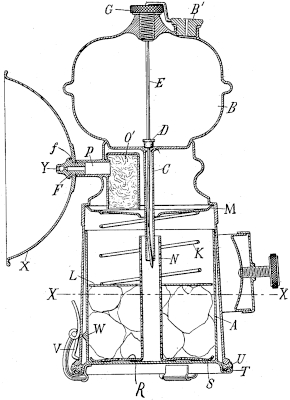
| This patent is the advent of the "carbide lamp". The patent contemplates its use as a bicycle or carriage lamp. The carbide lamp was also as used by miners during the relatively brief interval between this patent and the widespread availability in mines of generator-powered electric lighting. The carbide lamp in this patent contains calcium carbide and water which are mixed in a controlled manner to generate acetylene gas which is then fed to a burner orifice and ignited. This general form of lamp was already known but the inventor addressed a problem with earlier designs that used a needle-valve to meter out the water, and such valves were prone to clogging from sediment and erosion by the corrosive acetylene gas. Instead a rubber washer is used to create the upper service of the valve, and that washer bears against a small hole in the bottom of the water reservoir. Extending through the center hole in the rubber washer and through the bottom of the reservoir is a metal wire that extends down into the water reservoir and up through the top of the lamp where the wire's end is bent at 90 degrees to form a pointer. Surrounding the hole in the bottom of the reservoir is a circular depression with an additional wedge-shaped depression. The L-shaped end of the wire lies along a surface that is slightly sloped so that rotating the wire in one direction or the other will slightly raise or lower the length of wire and hence allow more or less water to flow. The mechanism is claimed to provide "an extremely nice adjustment of the valve and accurate control of the flow of water". |
|